Energy, Buildings & Operations
Increased energy efficiency, improved space management and measures in the areas of refrigerants, waste and waste water
In view of global developments, sustainability and climate protection have rightly taken on an increasingly important role in society in recent years. As a public institution and research driver in the region, the University of Lübeck would also like to fulfil the expectations of its role model function and take responsibility in the area of climate protection.
In order to fulfil this intention, an initial consultation on climate protection was carried out for the first time in 2022. At the beginning of 2025, the go-ahead was given for the development of the university's own climate protection concept in order to draw up a roadmap to climate neutrality that is as customised as possible. The focus is on 11 central fields of action in which the university would like to actively contribute to climate protection.
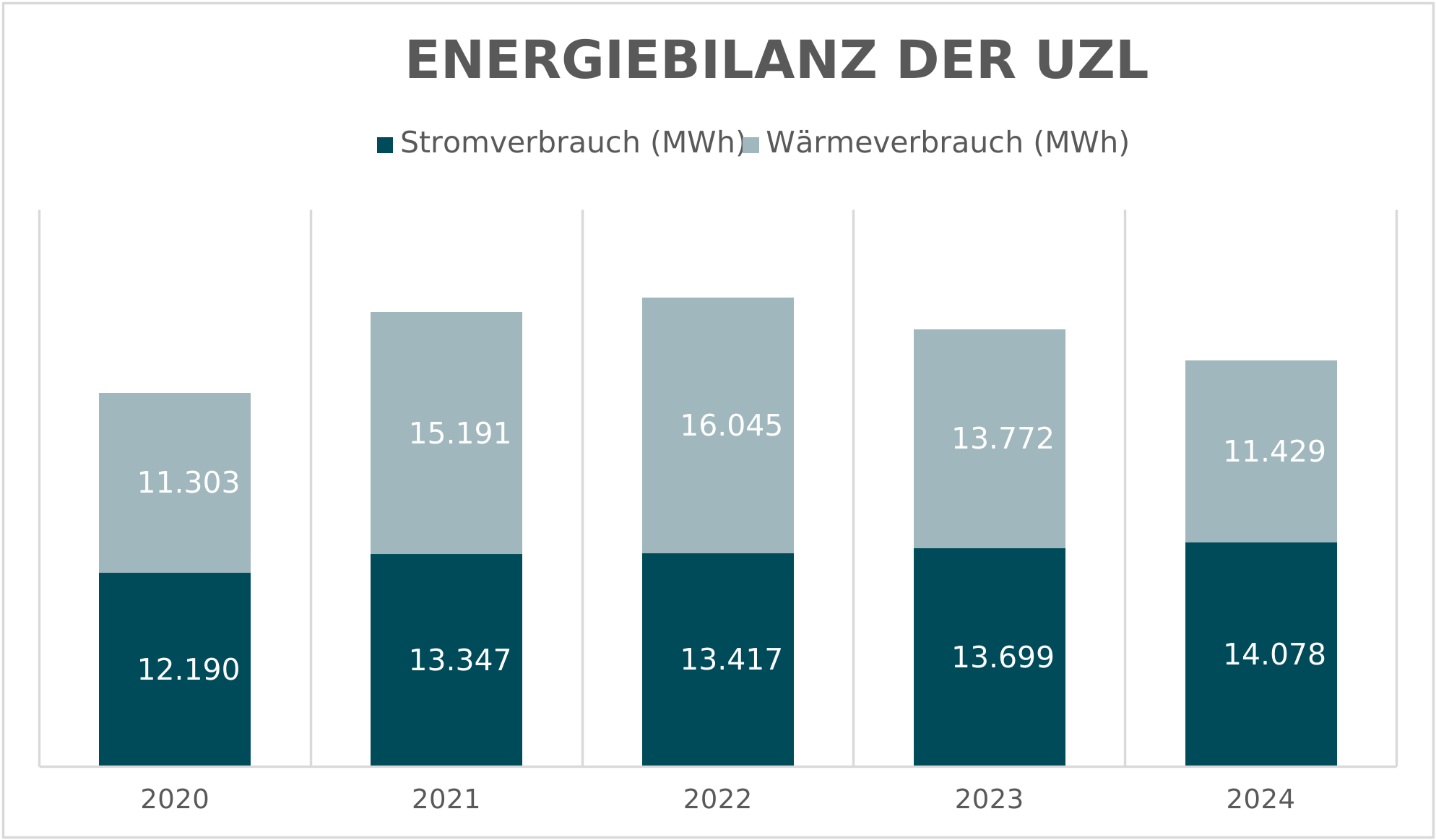
Energy balance of the University of Lübeck for the years 2020-2024
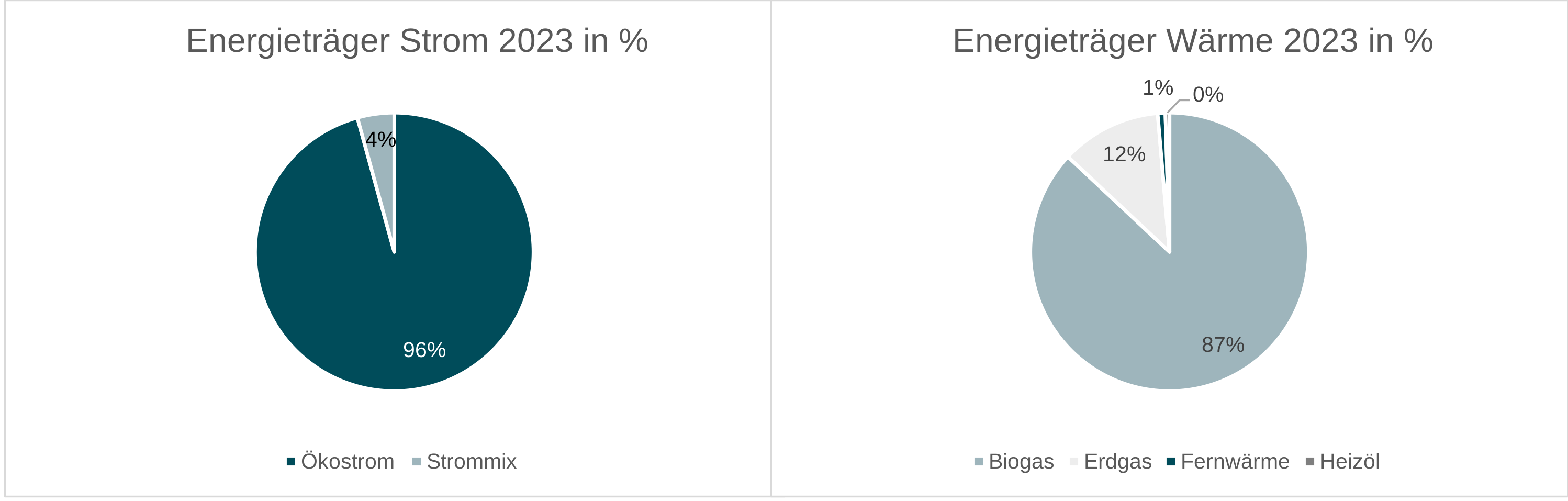
Breakdown of energy sources in % / green electricity = electricity from 100% hydropower
Due to its building operations and energy-intensive research work, the University of Lübeck is a major energy consumer. The energy balance is therefore intended to provide an overview of the development of energy consumption (electricity + heat) as well as an overview of the energy sources used.
In 2024, the University of Lübeck consumed a total of approx. 25,507 MWh of combined electricity and heat. This includes all campus buildings and the two external properties in the city centre (University Sports Centre + IMGWF); no reliable data could be collected for external rentals.
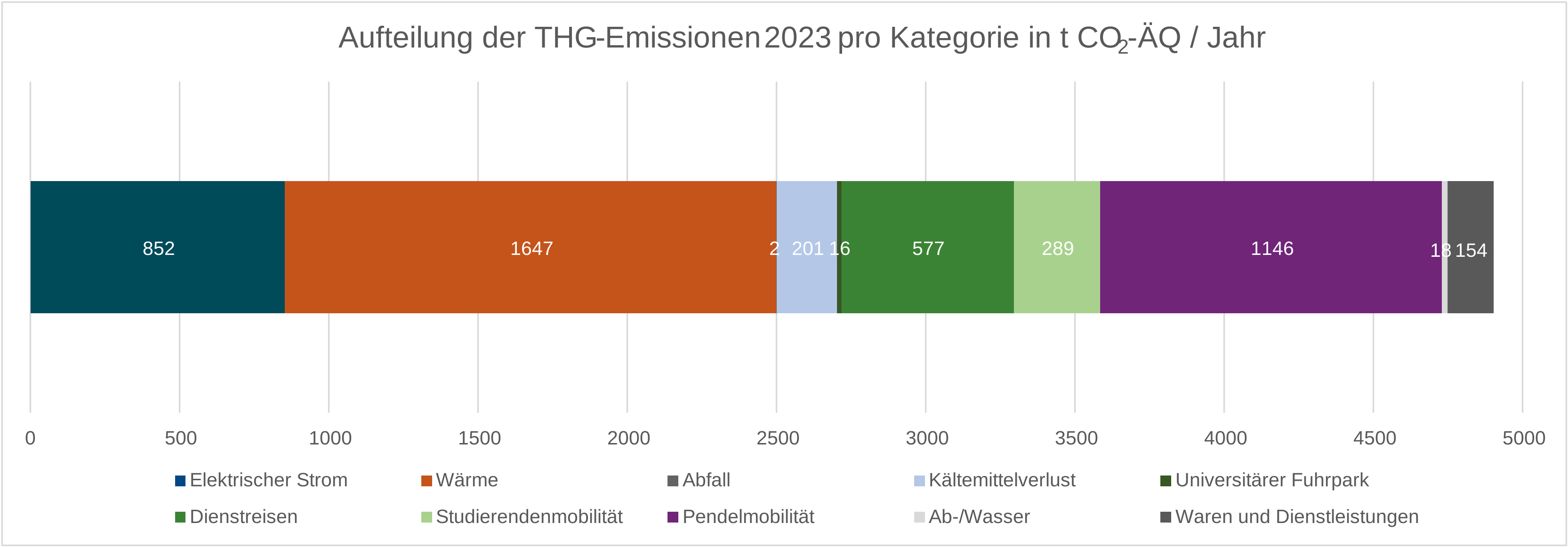
As part of the climate protection concept, a greenhouse gas balance was drawn up for the first time for 2023. The balance sheet was prepared using the "KliMax" tool (version 5.0), which was specially developed for universities, and also considers emissions from upstream and downstream processes, such as the production and disposal costs of green electricity products, technical equipment and means of transport. In total, data could be processed and utilised for 14 of the 16 categories.
According to the Regiomix approach, the university's emissions for 2023 totalled 4,902.14 tonnes ofCO2 equivalents. The largest emission factors are energy consumption (electricity: 852 tonnes, heat: 1,647 tonnes), commuter mobility (1,146 tonnes) and business trips by the university (577 tonnes).
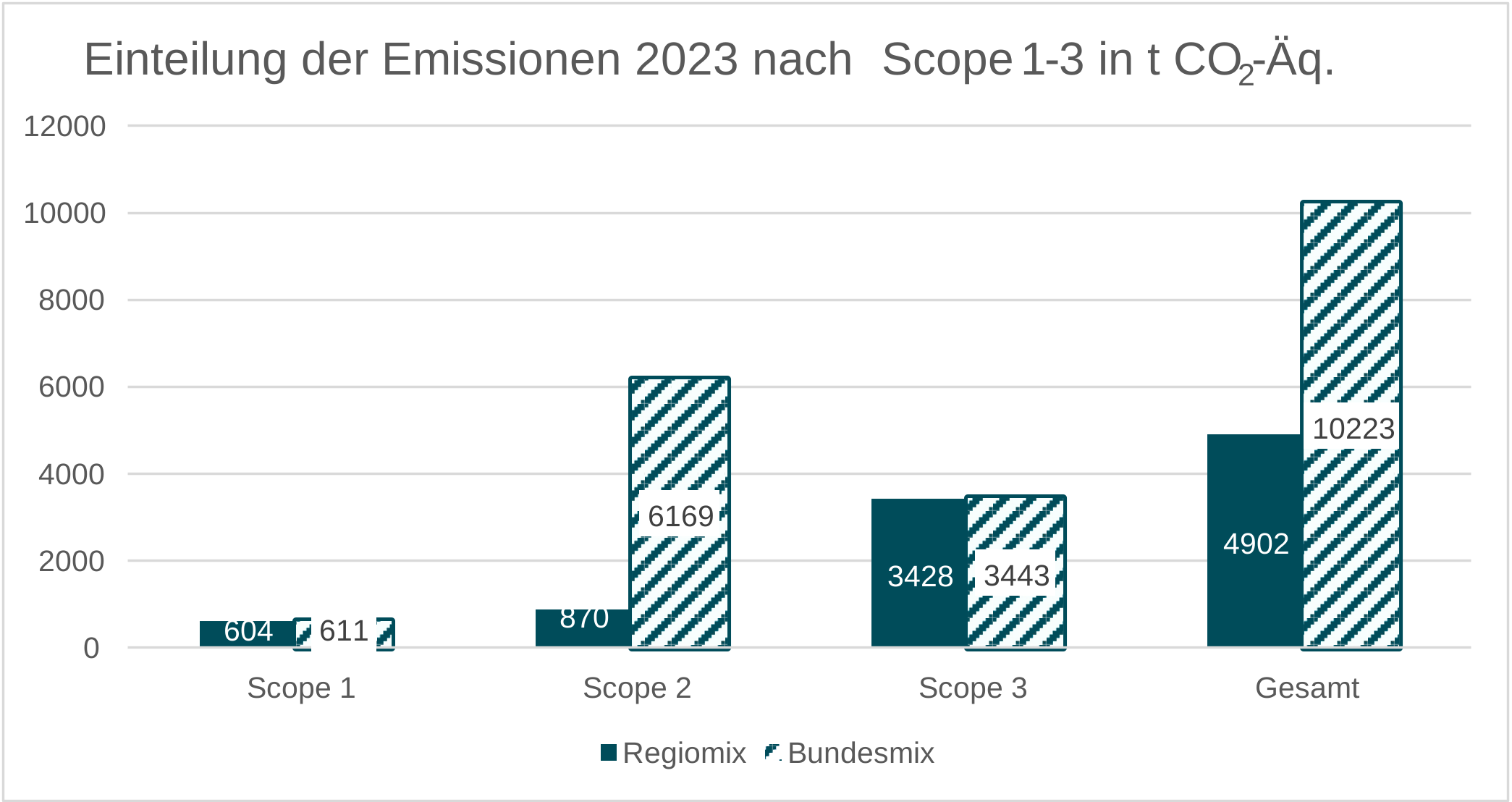
The greenhouse gas balance of the University of Lübeck is based on the international standard of the Greenhouse Gas Protocol. The standard covers all relevant greenhouse gases, sets standards for the qualitative characteristics of the data and divides the emissions into so-called scopes when analysing them.
Scope 1 comprises direct emissions from combustion processes on campus (heating processes, vehicle fleet), Scope 2 emissions from indirect energy-related emissions (electricity, district heating) and Scope 3 other indirect emissions, such as business travel, commuter mobility, waste/water or purchased goods and services.
For better comparability with other organisations, the presentation of Scope 2 emissions also requires a split presentation, which divides the Scope 2 emissions once according to the German federal mix and once according to the electricity product actually consumed (=regiomix) (dual reporting).
The greenhouse gas reduction is to be made possible by a broad catalogue of measures tailored to the university. The focus here is primarily on all identified greenhouse gas-intensive activities at the university. In order to provide as holistic a picture as possible, other areas have also been identified that focus on communication measures or integration into teaching and research, for example.
You can view the 11 fields of action below. After publication of the finalised climate protection concept in mid-2026, key measures and starting points can also be viewed here.
The development of the climate protection concept will be funded in the period from 1 January 2025 to 31 December 2026 via the municipal guideline of the Federal Ministry for the Environment, Climate Protection, Nature Conservation and Nuclear Safety (BMUKN) under the funding code 67K26674. This is a funding programme originally aimed at municipalities, which supports the systematic reduction of greenhouse gas emissions. The university is in the so-called initial project (No. 4.1.8a) of the funding programme, which supports the development of integrated climate protection concepts.
The aim is to develop a customised roadmap for the University of Lübeck to reduce its greenhouse gas emissions and achieve climate neutrality in the long term.
The aim is also to anchor the topic in the long term and to create a university-wide awareness of the issues of sustainability and climate protection, as well as offering various potentials for more efficient and cost-saving operations.
Back in 2019, the university community actively campaigned for more sustainability at the university. The resulting initiative ultimately led to the university's Green Office, which for the first time provided a central point of contact for all sustainability issues.
The structural starting signal for the university's climate protection efforts was also an externally commissioned initial consultation on the topic, from which the application for this funding ultimately emerged. The funding project began in 2025, and if the concept is successfully approved by the project organiser, there is also the possibility of further follow-up funding.
The project is being supported by HIS-HE GmbH and other internal university working groups.
The climate protection concept consists of a total of nine content-related parts as well as various requirements for the general preparation process. The content part includes, for example, a greenhouse gas balance, the definition of climate targets and the resulting development scenarios, a participatory catalogue of measures structured according to central fields of action, as well as strategies for continuation, communication, public relations and controlling. In addition, there are various requirements for communication, participation formats and fixed interim deadlines to be met during the development process.
Once the concept has been finalised, the planning for the follow-up funding and the implementation of the agreed measures begins.