Available research projects
Choose your research project.
Apply to a project that matches your academic background and research interests. Each project is hosted by a professor and connected to an eligible MSc programme.
DAAD-funded research & Master's pathway
The Lübeck Global Minds Masters (LüGloMMa) offers outstanding international Bachelor graduates a funded research fellowship followed by a student research assistant position during a Master's degree at the University of Lübeck.
NEWApplication Deadline
31 January 2027

At a glance
3–6 months research fellowship
Pathway to a student research assistant position after successful evaluation.
Fellowship duration
3–6 months
Travel allowance
up to €1,500
Monthly allowance
€992 / month
Eligible MSc programs
8 English-taught
After MSc admission
Student research assistant allowance*
* The student research assistant position depends on a positive fellowship evaluation and successful admission to an eligible MSc program. It is not unconditionally guaranteed after the fellowship.
Is LüGloMMa for you?
LüGloMMa is designed for high-potential international students who want to combine a research fellowship with an English-taught Master's degree in Lübeck.
Your path to LüGloMMa
Two separate applications are required: the LüGloMMa fellowship application and the regular MSc application to the University of Lübeck.
01
Apply for a research fellowship
Choose a research project matching your background and submit your application before the deadline. Collect all documents to apply for your MSc.
02
Complete your fellowship in Lübeck
Work with a professor from the University of Lübeck for 3–6 months on your chosen research project. Meanwhile, apply for your MSc.
03
Continue into your Master's
After a successful evaluation of your fellowship performance and separate MSc admission, continue with a student research assistant position alongside your studies.
Available research projects
Apply to a project that matches your academic background and research interests. Each project is hosted by a professor and connected to an eligible MSc programme.
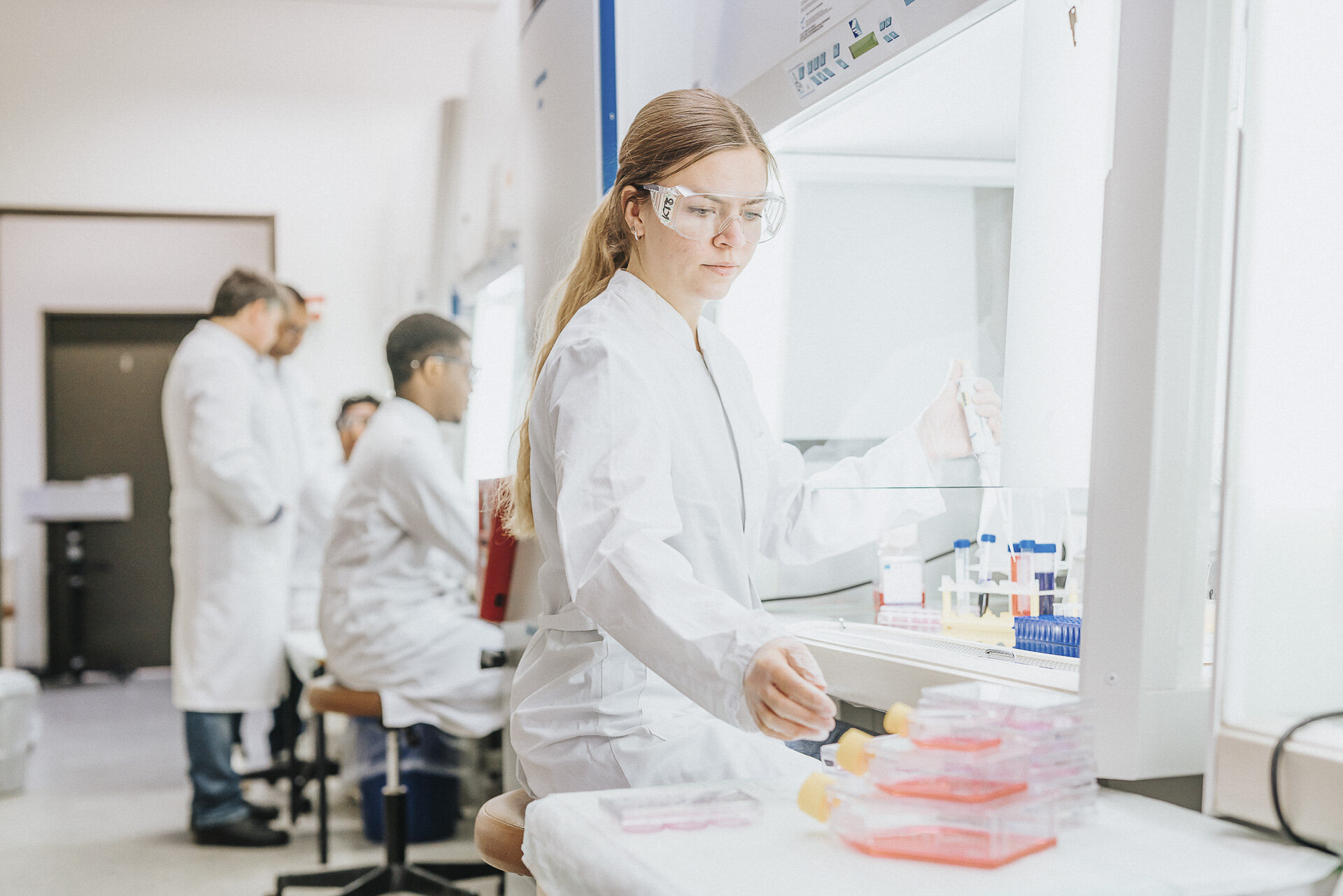
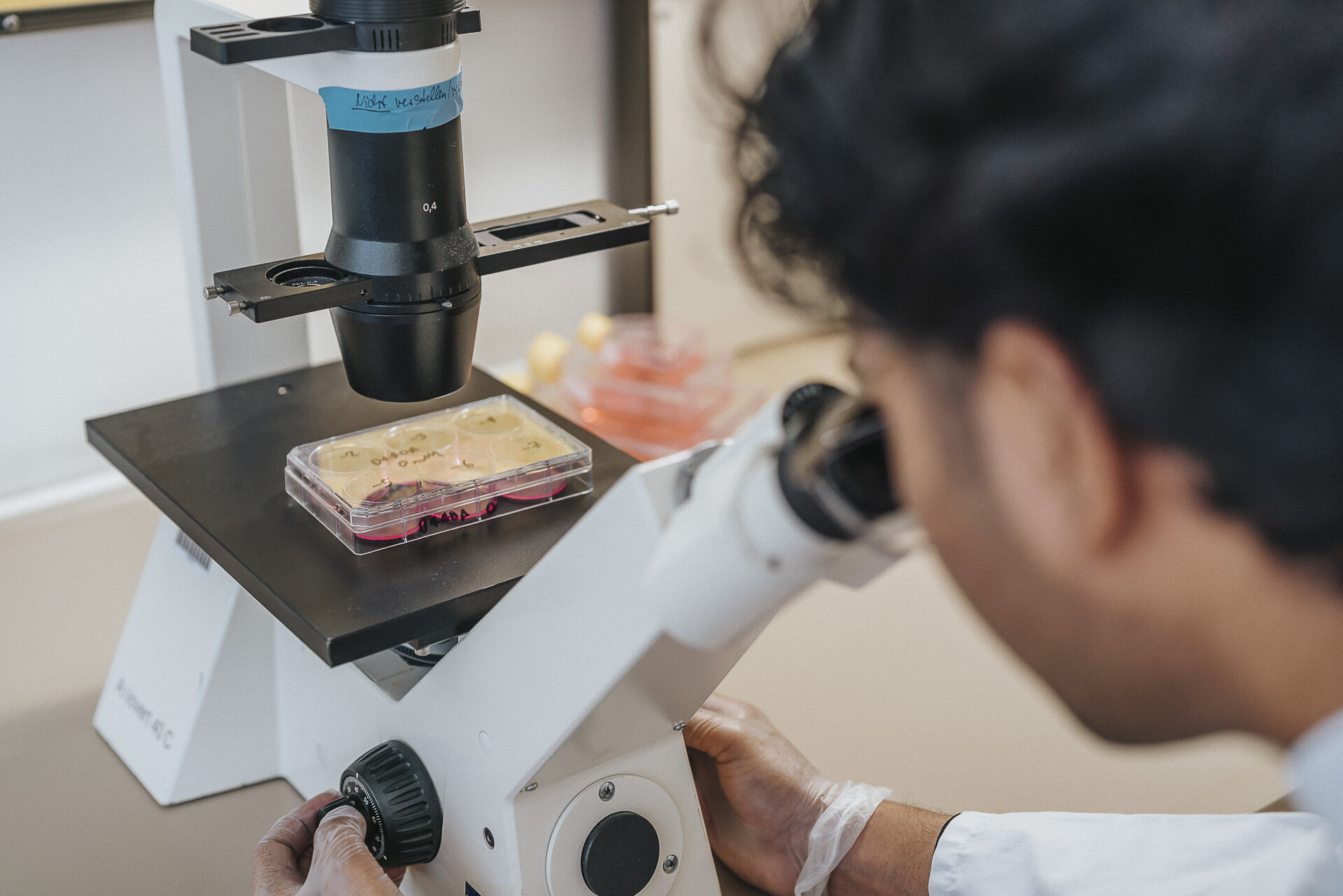
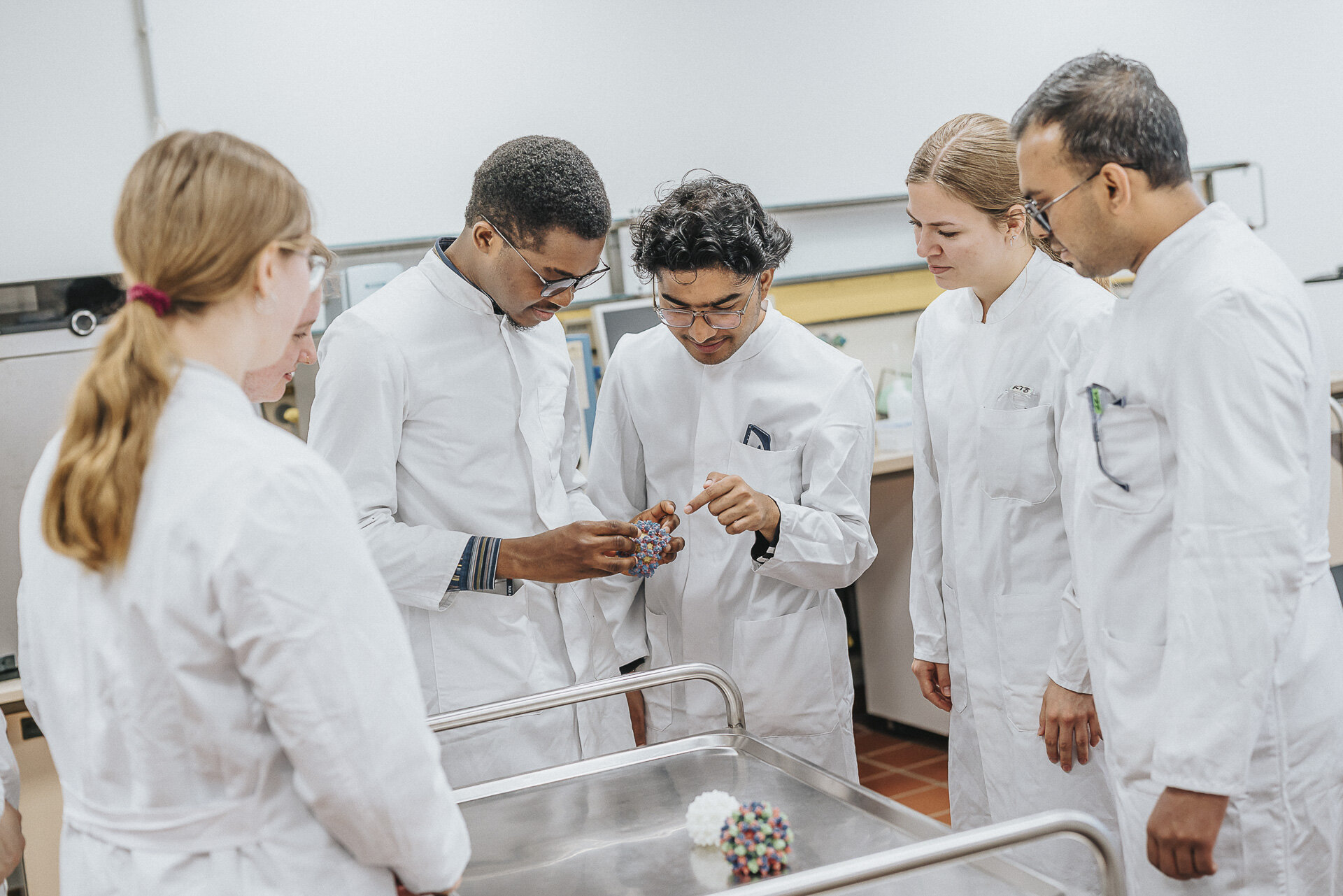
Infection Biology · Immunology
Professor
Prof. Dr. Thomas Krey
Institute
Institute of Biochemistry
Related MSc
Contribute to computational and experimental approaches for designing more effective vaccines against major human pathogens.
Useful background: Life sciences, biochemistry or a related discipline with wet-lab and computational experience.

Medical Robotics · Surgical Systems
Professor
Prof. Dr. Philipp Rostalski
Institute
Institute of Electrical Engineering in Medicine
Related MSc
Develop novel robotic tools and control strategies for precise and personalised surgery in an interdisciplinary team.
Useful background: Engineering, computer science or medical engineering with programming experience.
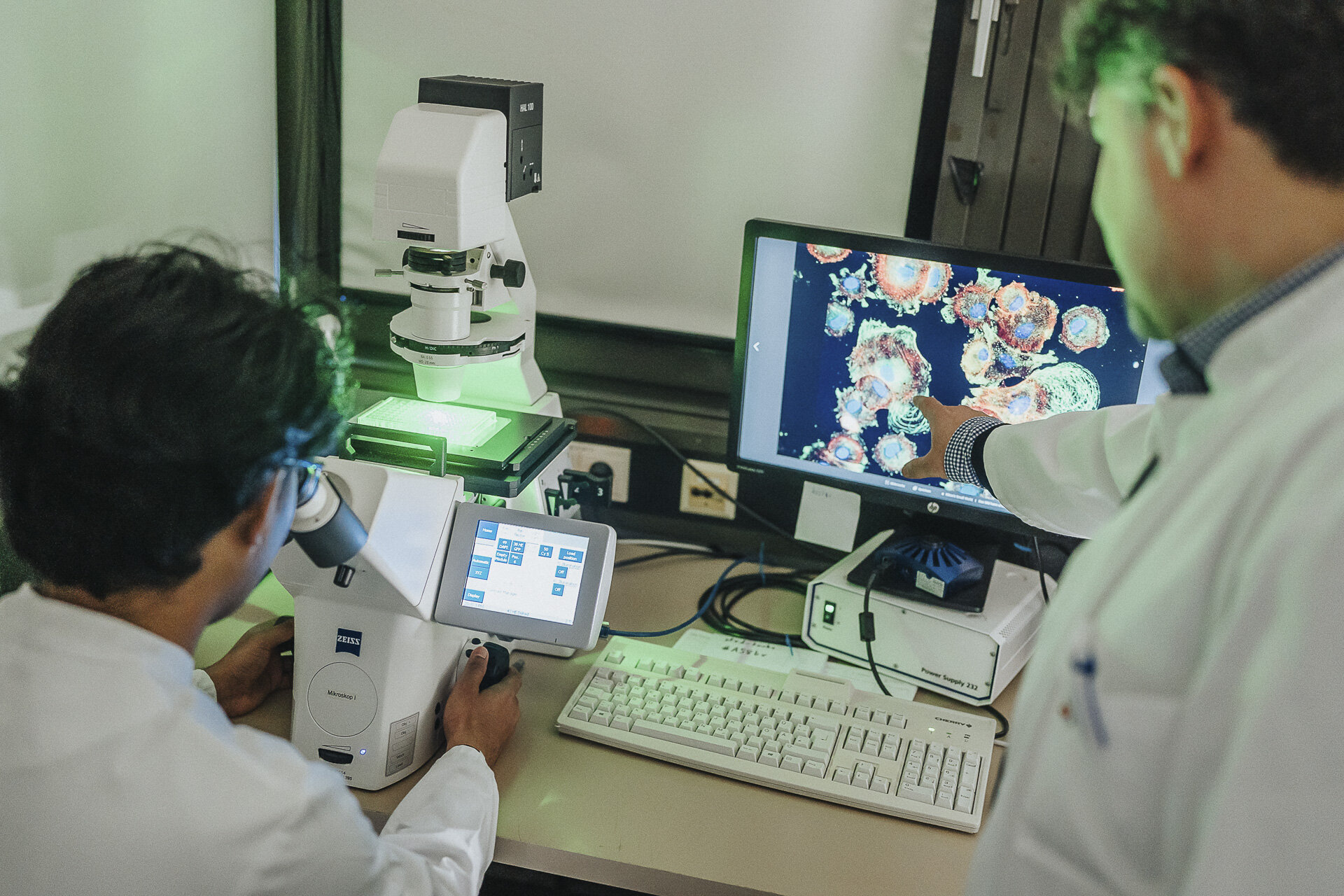
AI in Medicine · Personalised Nutrition
Professor
Prof. Dr. Christian Sina
Institute
Institute of Nutritional Medicine
Related MSc
Apply machine learning to metabolic and nutritional data to enable personalised nutritional strategies.
Useful background: Data science, statistics, medicine or nutritional sciences with ML familiarity.
IT Security · Agentic Systems
Investigate emerging threats to agentic AI systems and design methodologies for fragility analysis across layers.
Useful background: Computer science, IT security or a related field, with strong programming and systems skills. Experience with systems security, machine learning or LLMs is an advantage.

Eligible Master's programmes
Choose a programme that connects your Bachelor's background, your LüGloMMa research project and your future academic goals.

Funding explained
LüGloMMa offers financial support during your initial research fellowship. Upon successful evaluation and MSc admission, an allowance as student research assistant during your Master's.
Phase 1
Phase 2
Study and live in Lübeck
LüGloMMa is an invitation to become part of an international campus community in Northern Germany.

The University of Lübeck focuses on medicine, life sciences, informatics and engineering.
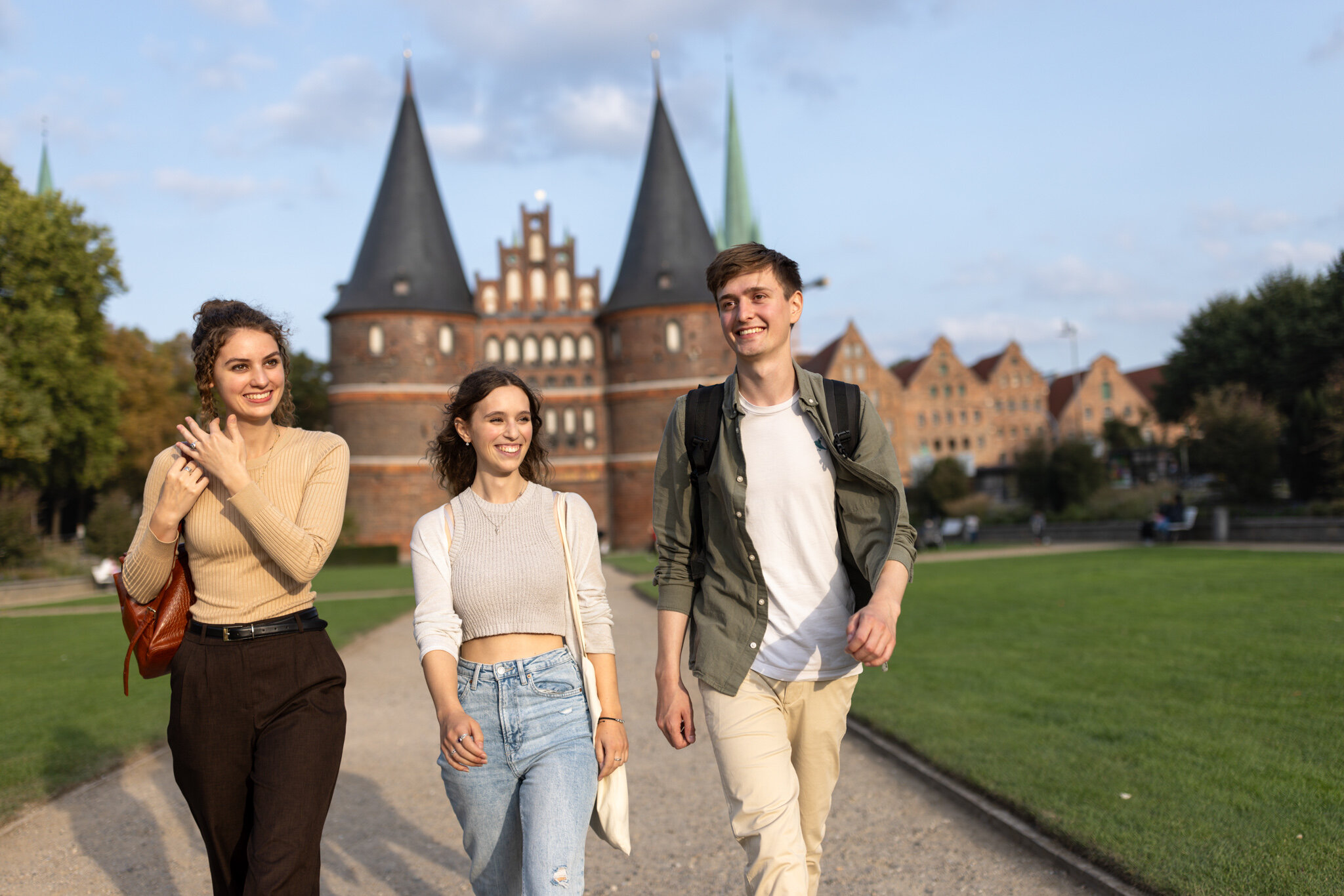
Live in a mediaeval Hanseatic city with red-brick architecture and a lively international community.
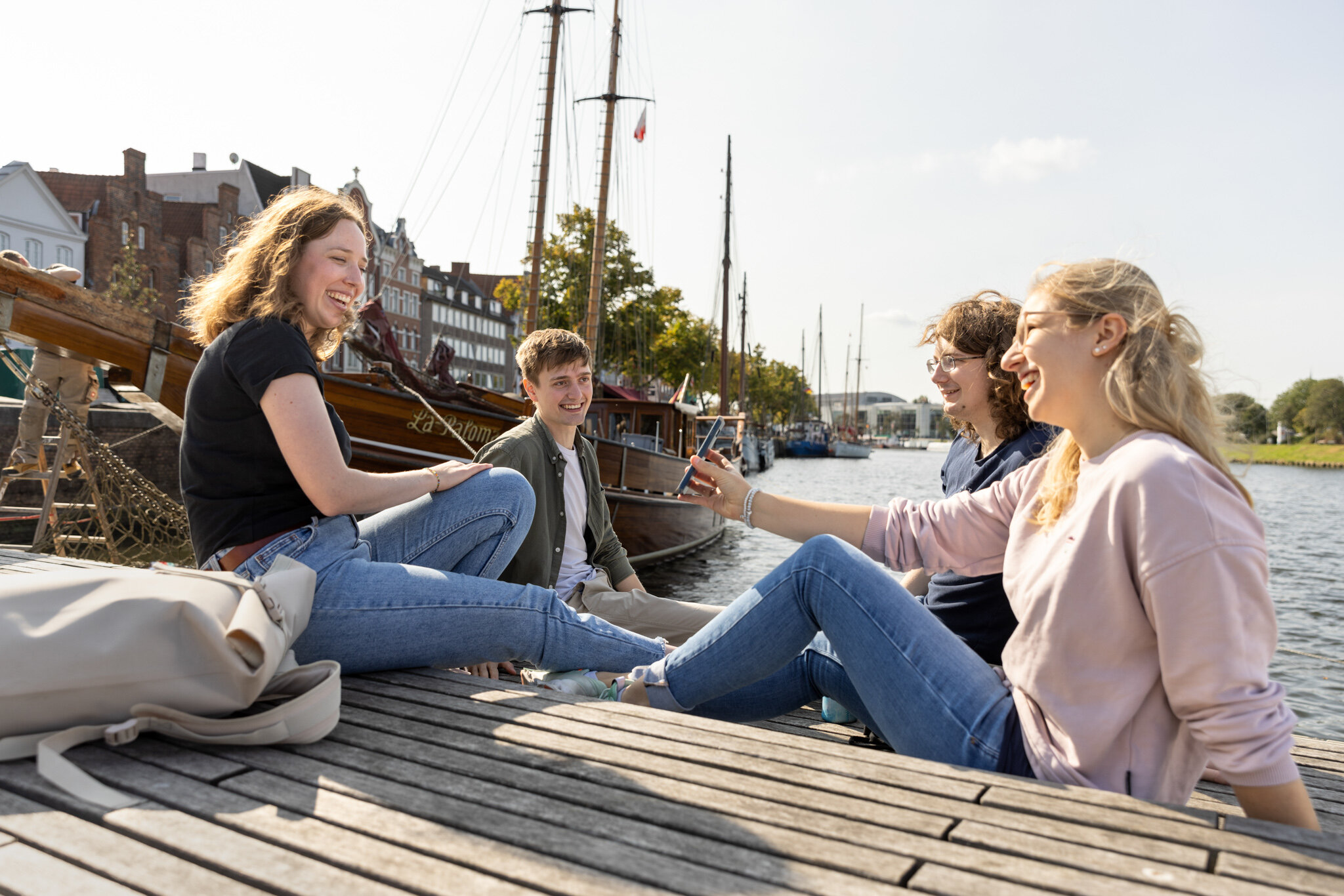
Beaches, forests and Hamburg — approximately 45 minutes away by train — are all easy weekend trips.

Support for international students
From planning your arrival to settling into life on campus, the LüGloMMa onboarding team and the International Office provide guidance for international students.
Application checklist
Everything you need to submit — in one clear order.
Step 01
Check the timeline, select a research project and a MSc, organise your application, and write your proposal
Step 02
Check MSc eligibility
Step 03
Prepare all required documents for both applications, the fellowship and the MSc
Step 04
Combine the documents to apply for the fellowship into one PDF
Step 05
Submit your fellowship application via the official application platform
A CV in English documenting your education, research experience, publications, internships and relevant skills.
Please include your full contact details.
Maximum 2 pages.
See the FAQ session below for suggestions about what to include in your CV.
A concise proposal (typically 4–5 pages) describing what you plan to do during the fellowship connected to the research project you are interested in.
Check the projects' descriptions above for expectations and specific requirements from each professor.
Please, include Gantt charts outlining:
If you need a visa, account for its processing time in your timeline. Consult the LüGloMMa timeline and the German Diplomatic Mission in your country to find out about visa processing times.
A letter explaining why you are applying for LüGloMMa, why you have chosen this research project and MSc programme, and how the fellowship fits your academic and career goals.
Maximum 2 pages.
At least one letter of recommendation from an academic referee (e.g. a Bachelor thesis supervisor or lecturer) commenting on your research potential.
Maximum 2 pages.
The recommendation letter must be signed by hand and bear an institutional stamp, or it must be signed using an Advanced Electronic Signature system.
You may voluntarily add information about special circumstances that were relevant for your academic path. This section is optional.
The selection committee takes this information into account in order to ensure equal opportunities.
Combine all required documents into a single PDF and submit them via the official application platform before 31 January 2027.
Start your applicationApplications are reviewed by the LüGloMMa selection committee and participating professors.
Timeline
Confirmed dates for the 2027 application round.
FAQ
Answers based on the current program information. For anything not covered here, please contact the LüGloMMa team.
Ask the LüGloMMa team Register for an online Info SessionThe current application deadline has been extented until January 31, 2027.
Check the LüGloMMa timeline for more information.
In your application, do not forget to include a Gantt-chart with a timeline of your visa estimates (if applicable), expected LüGloMMa Fellowship timeframe, and MSc begin.
International students who have (or are about to complete) a relevant Bachelor’s degree, who meet the entry requirements for an eligible MSc program, and who demonstrate C1-level English proficiency or qualify for an exemption.
Yes. Students in the final year of their Bachelor’s degree may apply. You will need to provide interim transcripts. Final admission is still conditional upon completing your Bachelor’s degree on time. Students enrolled at a German university at the time of application are not eligible.
Yes, but you will need to provide separate documents (research proposal, motivation letter) for each project. Applying to too many projects is not encouraged — focus on those that best match your profile and interests.
Yes. The LüGloMMa fellowship application and the standard MSc application are two separate processes, with different deadlines and requirements. The LüGloMMa team will support you during your fellowship to help you prepare and submit your MSc application.
The student research assistant position is subject to a positive fellowship evaluation and successful admission to an eligible MSc program. The position is guaranteed for those who receive a positive evaluation of their fellowship and are admitted to an eligible MSc program.
You will very likely need additional funds to cover living costs, health insurance and visa requirements. The DAAD grant and the position as a student research assistant provide core support during the fellowship and whilst you are studying.
Yes. The research fellowship and the associated Master’s program are based in Lübeck.
If you need a visa, consult the German Diplomatic Mission in your country to calculate your application time in advance.
If you are not admitted to an eligible MSc program, you will not be able to proceed to Phase 2 of LüGloMMa and will not be offered the position as a student research assistant. Please plan carefully with the program team.
You are still eligible to study the MSc program you applied for; however, you will not be offered a position as a student research assistant.
The International Office and the LüGloMMa onboarding team provide general guidance and specific individual services.
Yes. Although you will be studying online like other students on the MSc in Artificial Intelligence, you are still expected to be in Lübeck in order to be awarded the position as a student research assistant.
–Disability (with a degree of disability)
–Chronic illness or prolonged serious illness
–Childcare (care of children up to the age of 13)
–Care of relatives in need of care
–Extensive paid employment to finance Bachelor’s studies
–Refugee status
–Pregnancy and childbirth
–Compulsory military service
The information provided should be supported by relevant evidence, such as:
–Disability: severely disabled person’s pass or notification from the regional social welfare office
–Chronic illness: Medical certificate describing the effects and, ideally, specifying periods of absence
–Childcare/care: Children’s dates of birth, care times, level of care required by relatives
The UzL reserves the right to request relevant supporting documents if these have not already been submitted with the application.
The selection committee takes this into account to ensure equal opportunities (compensation for disadvantages) — it will never be used to your disadvantage.
The selection committee assesses applications in context. If you have disclosed special circumstances, these are weighed against your academic record so that structural or personal disadvantages do not reduce your chances. The committee treats this information confidentially. The University of Lübeck’s equal opportunities officer will monitor the application process for these candidates.
In two pages, provide an overview of your academic and professional background.
Some elements that can be included are, for example:
Education
– List your Bachelor’s degree, including the institution, field of study, and expected or conferred graduation date.
–Highlight any relevant coursework, specialisations or electives that demonstrate your academic focus.
Thesis or Capstone Project
– Include the title, a brief description of your work, your supervisor(s), and your final mark (if available).
–Highlight your role, methodology, and key findings. This is a great opportunity to showcase your ability to carry out independent, in-depth work.
Research Experience
–Provide details of any research-related activities: lab rotations, work placements, fieldwork, participation in a research group, or roles as a student research assistant.
–Describe what you actually did during these activities.
Publications, Posters and Presentations
–Include conference abstracts, poster presentations, oral presentations, or co-authored publications. For each, briefly describe your contribution.
Relevant Technical Skills
Be specific and concrete. Instead of ‘computer skills’, write, for example:
–Python (Pandas, NumPy) for data analysis and automation
–Western blotting and ELISA techniques in molecular biology laboratories
–R for statistical modelling and data visualisation
–GIS software (ArcGIS) for spatial analysis
–Confocal microscopy and image analysis using ImageJ
Awards and Recognition
List any scholarships, academic prizes, competitive fellowships or honours that demonstrate your academic excellence.
Provide evidence for all points listed in your CV.
Even if your research experience is limited, we value curiosity, initiative and the ability to think and work scientifically. A strong dissertation, a detailed course project or self-directed exploration (e.g. learning a new programming language, conducting a literature review on a topic of interest) can all demonstrate your potential.
Yes. You must submit a certified translation of these documents into English or German.
Certified English language proficiency at C1 level is required.
Accepted certificates and scores are:
– IELTS 7.5+
– TOEFL iBT® or TOEFL iBT® Home Edition 105+
– Cambridge C1 Advanced
If your Bachelor’s degree was taught in English or if English is your first language, you do not need to submit an English language certificate.
Your two-page motivation letter should explain the professional and personal reasons behind your application and your proposed project.
Some points you might cover include:
– Professional development: why this project is important for your academic and career path; what it will enable you to do in the future.
– Personal reasons: what attracts you to this experience beyond your professional goals; what you expect to gain on a personal level.
–Why UzL: why the University of Lübeck is the right place to carry out this project; consider the university’s research profile, programs, resources or location.
The letter must be written by a tenured or assistant professor who has supervised or taught you directly. Generic letters of praise carry little weight — reviewers will look for specific evidence of your capabilities.
The recommendation letter must be signed by hand and bear an institutional stamp, or it must be signed using an Advanced Electronic Signature system.
When requesting your letter, you can ask your referee to:
–Illustrate your research skills, proactivity and critical thinking with concrete examples — from coursework, a thesis, a laboratory session, a project or any setting where they observed you working.
–Explicitly endorse your ability to complete a demanding MSc program and to integrate into a new academic and social environment; this may draw on examples from group work, seminars, laboratory supervision or independent assignments.
-Certify your subject-specific knowledge and skills.
Unfortunately not. The DAAD requires applicants to live outside Germany when they apply.
Get in touch with the degrees' coordinator. You will find their contact information on the links above.
For the 3 to 6-month fellowship, you need a "student applicant visa" (Visum zur Studienbewerbung) – Paragraph 17 of the Residence Act (AufenthG).
Application deadline · 31 January 2027
Explore the available projects, check your eligibility and submit your LüGloMMa application.
Background & funding partners
LüGloMMa is funded by the DAAD as part of the Academic Horizons initiative and supported by Federal Ministry of Research and Technology.


Wir nutzen Cookies auf unserer Website. Einige von ihnen sind technisch notwendig. Andere sind optional und helfen uns, diese Website zu verbessern (z.B. Matomo) oder zusätzliche Funktionalitäten zur Verfügung zu stellen (z.B. YouTube-Videos). Weitere Informationen finden Sie in unserer Datenschutzerklärung.
Nur notwendige Cookies akzeptieren
Hier finden Sie eine Übersicht über alle verwendeten Cookies. Sie können Ihre Zustimmung zu ganzen Kategorien geben oder sich weitere Informationen anzeigen lassen und so nur bestimmte Cookies auswählen.
Diese Cookies ermöglichen grundlegende Funktionen und sind für die einwandfreie Funktion der Website erforderlich.
Cookie Informationen anzeigen
Cookie Management
Speichert Ihre Einwilligung zur Verwendung von Cookies und enthält die gewählten Tracking-Opt-In-Einstellungen.
| Anbieter: | Webseite |
| Cookiename: | waconcookiemanagement |
| Laufzeit: | 1 Jahr |
FE user
Dieses Cookie ist ein Standard-Session-Cookie von TYPO3. Es speichert im Falle eines Benutzer-Logins die Session-ID. So kann der angemeldete Benutzer wiedererkannt werden und es wird ihm Zugang zu geschützten Bereichen gewährt.
| Anbieter: | Webseite |
| Cookiename: | fe_typo_user |
| Laufzeit: | Session |
Statistik Cookies erfassen Informationen anonym. Diese Informationen helfen uns zu verstehen, wie unsere Besucher unsere Website nutzen.
Cookie Informationen anzeigen
Matomo Analytics
Wir verwenden Matomo Analytics, um das Verhalten der Besucherinnen und Besucher auf unserer Website zu analysieren und unsere Online-Angebote zu verbessern. Dabei kommen Cookies zum Einsatz, die unter anderem eine Wiedererkennung von Besuchern ermöglichen.
Gespeichert werden z. B. die anonymisierte IP-Adresse, aufgerufene Seiten, Herkunftsseiten (Referrer), Verweildauer sowie eingesetzte Geräte und Browser.
Die durch die Cookies erzeugten Informationen werden ausschließlich auf Servern der Universität zu Lübeck gespeichert und nicht an Dritte weitergegeben.
Eingesetzte Cookies:
1. _pk_id – Wiedererkennung von Besuchern (Speicherdauer: 13 Monate)
2. _pk_ses – temporärer Sitzungs-Cookie (Speicherdauer: 30 Minuten)
| Anbieter: | Website |
| Cookiename: | _pk_id |
| Laufzeit: | 13 Monate |
| Host: | www2.uni-luebeck.de |
Inhalte von Videoplattformen und Social Media Plattformen werden standardmäßig blockiert. Wenn Cookies von externen Medien akzeptiert werden, bedarf der Zugriff auf diese Inhalte keiner manuellen Zustimmung mehr.
Cookie Informationen anzeigen
Google Maps
Eine direkte Verbindung zu den Servern von Google wird erst hergestellt, wenn Sie Google Maps selbstständig aktivieren (Einwilligung nach Art. 6 Abs. 1 lit. a DSGVO). Nach der Aktivierung wird Google Maps Ihre IP-Adresse speichern. Mit dem Laden der Karte akzeptieren Sie die Datenschutzerklärung von Google.
| Anbieter: | Google LLC |
| Datenschutzlink: | https://policies.google.com/privacy?hl=de |
YouTube Videos
Eine direkte Verbindung zu den Servern von YouTube wird erst hergestellt, wenn Sie die Videos selbstständig aktivieren (Einwilligung nach Art. 6 Abs. 1 lit. a DSGVO). Nach der Aktivierung wird YouTube Ihre IP-Adresse speichern. Mit dem Laden der Videos akzeptieren Sie die Datenschutzerklärung von YouTube.
| Anbieter: | YouTube / Google LLC |
| Datenschutzlink: | https://policies.google.com/privacy?hl=de |